
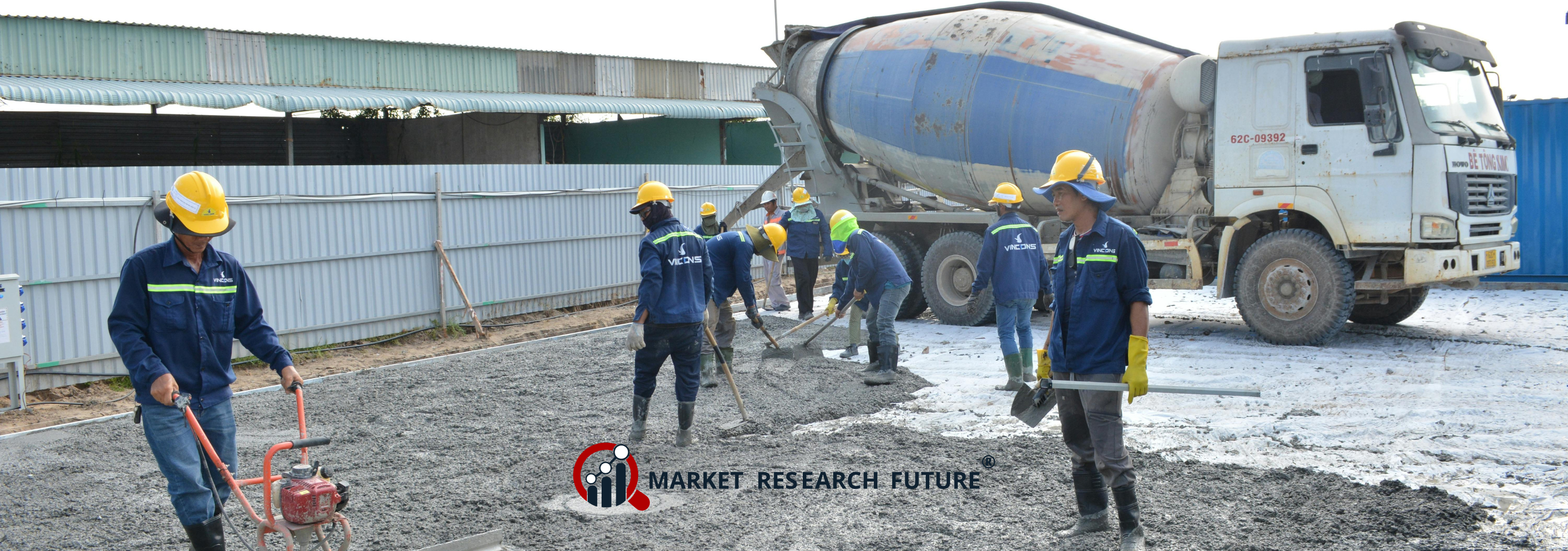
In the face of increasing environmental awareness and infrastructure demands, the cement and concrete additive market is poised for significant transformation. Projections indicate a remarkable growth trajectory, with the market size expected to reach $51.44 billion by 2035, reflecting a compound annual growth rate (CAGR) of 8.16%. This growth is fueled by a robust construction sector, particularly in North America, where activities remain vigorous. The industry's rapid evolution is underpinned by a shift towards sustainable practices and innovative technologies. Market players are increasingly integrating advanced additives to enhance performance, reduce carbon footprints, and meet stringent regulatory demands. As these dynamics unfold, a comprehensive cement and concrete additive market future outlook will provide insights into emerging trends and investment opportunities.
The cement and concrete additives market is currently characterized by robust competition and substantial investment from key players. Major companies such as LafargeHolcim (CH), Cemex (MX), and HeidelbergCement (DE) are leading the charge in innovation and sustainability. These entities are capitalizing on the growing demand for eco-friendly solutions in construction. Additionally, firms like BASF (DE) and Sika (CH) are actively developing advanced chemical and fiber additives, which have become essential in construction applications. Recent trends show that North America retains its position as the largest market, driven by escalating construction activities, while the Asia-Pacific region is emerging as the fastest-growing segment due to rapid urbanization and infrastructural development.
Several factors are propelling the growth of the cement and concrete additive market. Firstly, increasing investments in public infrastructure are driving demand for high-performance concrete. As cities expand and modernization initiatives gain momentum, the need for durable and sustainable materials becomes critical. Furthermore, the rising emphasis on environmentally friendly construction practices aligns with the global movement towards sustainability. For instance, chemical additives enhance the longevity and performance of concrete, which in turn reduces the need for frequent repairs and replacements, contributing to lower overall carbon emissions.
On the other hand, challenges persist in the form of fluctuating raw material prices and regulatory hurdles. Market players must navigate complex regulations pertaining to chemical additives, which can hinder innovation. The competitive landscape requires companies to invest significantly in research and development to stay ahead. Moreover, economic fluctuations can impact construction spending, thereby influencing the demand for cement and concrete additives as economic uncertainty may lead to project delays.
Regionally, the North American market holds a substantial share, benefiting from a booming construction sector and favorable government regulations that promote infrastructure development. The cement and concrete additive market size in this region is projected to expand, supported by increasing investments in commercial and residential construction projects. This growth is not just confined to urban centers; suburban and rural areas are also witnessing a surge in construction activity.
Conversely, the Asia-Pacific region is experiencing unprecedented growth, emerging as the fastest-growing segment within the market. This surge can be attributed to rapid urbanization, a burgeoning population, and significant infrastructure projects across countries like India and China. These nations are investing heavily in their infrastructure, creating a strong demand for innovative concrete solutions. In fact, it is estimated that the Asia-Pacific cement additive market will grow at a CAGR of 9.5% from 2022 to 2032, reflecting the urgency of development initiatives in these countries. The market dynamics in these regions suggest that companies may find lucrative Cement and Concrete Additive Market opportunities in both established and developing economies.
The cement and concrete additive market is ripe with opportunities driven by innovative materials and applications. The growing construction sector is increasingly leaning towards sustainability, with a focus on using eco-friendly materials. The rise of fiber additives, for instance, is noteworthy as they offer enhanced performance characteristics while minimizing environmental impact. As companies invest in R&D, there is a clear pathway for developing new products that meet the demands of both commercial and residential sectors.
Moreover, strategic partnerships and collaborations between companies can lead to enhanced product offerings and market penetration. As demand for high-performance concrete continues to rise, companies have the chance to capture market share by focusing on innovation and sustainability. This competitive landscape is not only defined by existing players but also by emerging startups looking to disrupt traditional methods with novel solutions.
Looking ahead, the future outlook for the cement and concrete additive market is optimistic, with strong growth projections. Experts anticipate that by 2035, the market will not only expand in size but also evolve in terms of technology and product offerings. Innovations in additive manufacturing and smart materials are expected to take center stage, driving efficiency and performance in construction projects.
Furthermore, as the global construction industry adapts to economic and environmental changes, the emphasis on sustainability will only increase. Companies that align their strategies to incorporate sustainable practices are likely to emerge as leaders, capturing significant market share and paving the way for future growth. For example, research indicates that the adoption of sustainable practices can lead to a 30% reduction in operational costs for construction firms, demonstrating a clear cause-and-effect relationship between sustainability and profitability. As the market matures, it will be essential for stakeholders to remain agile and responsive to these transformative trends.
Browse for more Reports:

 English
 Arabic
 French
 Spanish
 Portuguese
 Deutsch
 Turkish
 Dutch
Dutch
 Italiano
 Romaian
 Portuguese (Brazil)
 Tiếng Việt